




Choosing the right NC switch is not simply about finding a switch labeled "NC." The right choice depends on how the circuit should behave when the switch is not activated, what happens when it is pressed, and the electrical and environmental conditions of the application.
For most buyers, the key question is:
Do I need the circuit to stay connected until the switch is pressed or activated?
If the answer is yes, a normally closed switch may be the right choice.
This guide explains what an NC switch is, how to select one, and which specifications you should check before purchasing.
What Is a Normally Closed Switch?
A normally closed switch (NC switch) is a switch whose contacts are closed in its normal, unactivated state. This means electrical current can pass through the circuit before the switch is operated.
When the switch is activated, the NC contacts open and interrupt the circuit.
A simple way to understand it is:
Normal state → Circuit ON
Switch activated → Circuit OFF
This is the opposite of a normally open (NO) contact, which remains open until the switch is activated.
NC vs. NO Switch
| Contact Type | Normal State | When Activated |
| Normally Closed (NC) | Circuit closed | Circuit opens |
| Normally Open (NO) | Circuit open | Circuit closes |
This distinction is one of the first things you should confirm when selecting a push button or control switch.
When Should You Use an NC Switch?
An NC switch is useful when you want a circuit to remain connected during normal operation and be interrupted when the switch is pressed, released, opened, or otherwise actuated.
Common applications include:
- Control panels
- Industrial machinery
- Safety and protection circuits
- Emergency stop systems
- Door and access controls
- Limit and position detection
- Industrial automation equipment
- Equipment shutdown circuits
- Alarm and monitoring systems
For example, an NC contact can be used in a control circuit where the machine is expected to operate normally while the contact remains closed. Activating the switch breaks the circuit and stops the relevant operation.
For safety-related applications, however, the complete circuit design should be evaluated according to the applicable safety requirements rather than relying on the NC contact alone.
5 Things to Check When Choosing an NC Switch
Once you know that you need a normally closed contact, there are several specifications worth checking before placing an order.
1. Check the Contact Configuration
Start with the contact arrangement.
Depending on the switch design, you may need:
- NC only
- NO only
- NO + NC
- Multiple contact groups
If your application needs both functions, an NO/NC push button switch can provide greater flexibility. This is particularly useful in control panels where one switch needs to perform different electrical functions.
Before ordering, check the datasheet carefully rather than assuming that every push button has the same contact configuration.
2. Check the Electrical Rating
The switch must be suitable for the voltage and current used by your circuit.
Important specifications include:
- Rated voltage
- Rated current
- AC or DC operation
- Electrical life
- Contact material
For example, a switch rated for a low-current control circuit should not automatically be used to directly switch a high-current load.
If the switch is being used to control a relay, PLC input, contactor, or other control device, check the requirements of that circuit specifically.
A good rule: select the switch based on the actual electrical load, not simply the physical size of the button.
3. Choose the Right Mounting Size
Push button switches come in different mounting sizes, so make sure the switch matches the mounting hole in your panel.
Common mounting sizes include:
- 12 mm
- 16 mm
- 19 mm
- 22 mm
- 25 mm
If you are replacing an existing switch, measure the panel cutout before ordering.
The outside diameter of the button is not necessarily the same as the required mounting hole size. Always check the manufacturer's installation dimensions.
4. Consider the Environment
Where will the NC switch be installed?
For indoor control cabinets, basic protection may be sufficient. For machinery, outdoor equipment, or applications exposed to dust and water, a higher IP rating may be more appropriate.
For example:
- IP40 - suitable for relatively protected indoor environments
- IP65 - protection against dust and water jets
- IP67 - dust-tight and suitable for temporary immersion under specified conditions
The required protection level depends on the actual installation environment.
Also consider temperature, vibration, chemicals, oil, moisture, and mechanical impact if the switch will be installed in demanding industrial conditions.
5. Choose the Right Switching Action
The switching action is another important consideration.
A push button may be:
Momentary:
The contact changes state while the button is being pressed and returns when the button is released.
Latching:
The contact changes state and remains in that position until the button is operated again.
For a normally closed push button switch, understanding the switching action helps you predict exactly what the circuit will do during operation.
If you are replacing an existing switch, check both the contact configuration and the switching action rather than looking only at the button appearance.
Should I Choose a Momentary or Latching NC Switch?
This depends on what you want the switch to do.
Choose a momentary NC switch when the circuit should return to its original state after the operator releases the button.
Choose a latching NC switch when the changed state needs to remain until the switch is operated again.
For industrial control applications, momentary switches are commonly used as operator inputs, while latching designs can be useful when a maintained ON/OFF state is required.
The exact choice should always follow the control logic of the equipment.
What About an Illuminated NC Switch?
If the switch is installed on a busy control panel, an illuminated button can make the operating status easier to see.
An illuminated push button switch can use an LED indicator in colors such as red, green, blue, yellow, or white.
However, the lighting function and the switching contacts are separate considerations. A switch being illuminated does not automatically tell you whether its contact is NO or NC.
When purchasing, check:
- Contact configuration
- LED voltage
- LED color
- Switching action
- Mounting size
- IP rating
This prevents a common purchasing mistake: selecting a switch based mainly on its appearance while overlooking its electrical specifications.
What Is the Best NC Switch for Industrial Applications?
There is no single "best" normally closed switch for every application.
For industrial equipment, buyers typically need to balance:
- Contact configuration
- Electrical rating
- Mechanical life
- Electrical life
- Mounting dimensions
- IP protection
- Operating force
- Button design
- Terminal or wiring method
- Required certifications
- Operating environment
For equipment exposed to dust, moisture, vibration, or frequent operation, durability and environmental protection may be more important than simply choosing the lowest-cost switch.
If the switch is part of a safety function, make sure the complete safety circuit and components meet the applicable standards and requirements for the machine.
How Do I Know If an NC Switch Is Compatible With My Existing Equipment?
Before replacing an existing switch, compare the following specifications:
1. Mounting hole:
Does the new switch fit the existing panel cutout?
2. Contact configuration:
Does it provide NC, NO, or NO + NC contacts as required?
3. Electrical rating:
Can the contacts handle the voltage and current of the circuit?
4. Switching action:
Is the original switch momentary or latching?
5. Terminal/wiring method:
Are the terminals or wires compatible with your existing installation?
6. Physical dimensions:
Will the button and body fit without interfering with nearby components?
7. Environmental protection:
Is the IP rating suitable for the installation environment?
Checking these points before ordering can save considerable time and avoid unnecessary modifications to the control panel.
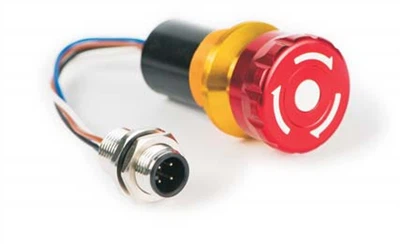
ONPOW NC Push Button Switches for Control Applications
For buyers looking for a reliable switch button push solution, ONPOW offers a range of push button switches designed for control panels and industrial equipment.
Different series can be selected according to mounting size, contact configuration, illumination, protection level, switching action, and other application requirements. This makes it easier to match the switch to the actual control circuit rather than choosing only by appearance.
When selecting an ONPOW switch, the same principle applies: start with the circuit requirements, then match the mechanical and environmental specifications.
Final Thoughts
Choosing the right normally closed switch starts with understanding what you need the circuit to do in its normal state.
If the circuit should remain closed until the switch is activated, an NC contact may be appropriate. From there, check the contact configuration, electrical rating, mounting size, switching action, IP rating, and operating environment.
For most buyers, the most important step is not choosing the switch based on its appearance. Choose the electrical function first, then select the physical design and features that fit your equipment.
That approach makes it easier to find an NC switch that is not only compatible with your circuit but also suitable for long-term use.