


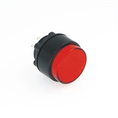

Dip Switch
Your Professional Dip Switch Supplier
We are a manufacturer of all kinds of pushbutton switches. From the factory - direct to the hands of consumers, here we save (total distribution-wholesalers-stores) and other channels, for you to provide a simple direct and effective supply! Besides our existing molded products, YongYuan also can production of products according to the drawings or samples from our customers.


Why Choose Us
24-Hour Service
Our dedicated 24-hour online support ensures prompt responses, providing you with an excellent shopping experience. Feel free to reach out with any questions at any time.
Professional technical support
We have an experienced technical team that can provide comprehensive technical support from product design and process optimization to maintenance.
Our Certificate
Under the strict management of ISO9001 quality system, environmental system ISO14001, the company's products have passed a series of international standard certificates such as UL, VDE, CCC, CE (LVD), CE (EMC).
Customized solutions
Every customer is unique, which is why we offer tailored solutions to meet your specific requirements. We offer technical support that is second to none.We take pride in our rapid response and flexibility to ensure your needs are met.
Advantages of Dip Switch
Configurability: One of the primary advantages of DIP switches is their configurability. DIP switches allow users to set or configure specific parameters, options, or settings in electronic devices and systems. By toggling individual switches on or off, users can customize the behavior, functionality, or operational mode of a device to suit their specific requirements.
Ease of Use: DIP switches are user-friendly components that require no additional tools or programming knowledge to operate. Users can simply toggle the switches to the desired position using their fingers or a small tool.
Physical Configuration: DIP switches come in a compact and standardized physical package, typically featuring a row of small toggle switches arranged in a dual in-line configuration. This standardized form factor allows DIP switches to be easily integrated into various electronic devices and systems, regardless of the manufacturer or specific application.
Versatility: DIP switches are highly versatile components that can be used in a wide range of applications across different industries. From configuring communication interfaces and setting device addresses to enabling hardware features and selecting operational modes, DIP switches offer flexible solutions for customizing the functionality of electronic systems.
Customization: DIP switches enable customization of electronic devices and systems to meet specific user preferences, operational requirements, or application needs. With DIP switches, designers and engineers can implement user-selectable options, adjust parameters on-the-fly, or provide easy access to configuration settings without the need for additional hardware or software modifications.
Real-time Adjustment: Unlike software-based configuration methods that may require reprogramming or rebooting the device, DIP switches allow for real-time adjustment of settings or parameters. Users can quickly and easily modify the configuration by toggling the switches, facilitating rapid prototyping, testing, and optimization of electronic systems.
Reliability: DIP switches are known for their robust construction, reliable performance, and long-term durability. These switches feature mechanical contacts that provide stable electrical connections and withstand repeated actuations over time. With proper installation and handling, DIP switches offer reliable operation in a wide range of operating conditions and environments.
Technical Specifications
|
Parameter |
Value / Description |
|
Switch Type |
Slide, Rocker, Rotary, Piano |
|
Number of Positions |
1 to 12 (2, 4, 8, 10, 12) |
|
Contact Rating |
25 mA to 100 mA @ 24V DC |
|
Contact Resistance |
≤ 100 mΩ |
|
Insulation Resistance |
≥ 100 MΩ @ 500V DC |
|
Dielectric Strength |
500V AC for 1 minute |
|
Operating Temperature |
-40°C to +85°C |
|
Actuation Force |
100gf to 400gf (depending on type) |
|
Mounting Type |
Through-Hole or Surface Mount (SMT) |
|
Life Expectancy |
1,000 to 10,000 cycles per switch |
|
Pitch (Pin Spacing) |
2.54 mm (standard) |
|
Material |
Housing: Plastic, Contacts: Gold/Tin-Plated Copper Alloy |
Different Types of Dip Switch
Slide DIP Switch
This is the common type, where each switch slides horizontally to open or close the circuit. It's easy to operate and ideal for repeated manual configurations.
Rocker DIP Switch
Rocker DIP switches use a small see-saw mechanism. Each rocker toggles between ON and OFF positions with a firm tactile response, making it reliable for long-term settings.
Rotary DIP Switch
Rotary DIP switches rotate to select a position from a set range. These are often used when more combinations are needed in a small space.
Piano DIP Switch
These switches resemble piano keys and are pressed down to make contact. They’re known for saving vertical space and providing better dust protection.
Surface Mount DIP Switch
Designed for automated PCB assembly, these switches are mounted directly onto the board surface, making them suitable for compact electronic designs.
Through-Hole DIP Switch
These switches have pins that pass through the PCB and are soldered on the opposite side. They offer stronger mechanical stability in rough environments.
Striker pin
Use an implement with a thin tip to set the striker to the on or off position. Contact force is applied to the wiper to maintain stable contact between the wiper and the contact.
Rocker contact
The contact is a v-shaped moving contact. The rocker contact moves along with the striker to either open or close the connection between the two contacts and turn the switch on and off.
Cover
The cover is connected to the base to protect the internal mechanisms of the switch.
Contact Terminals
The contact terminal is built-in in the base. There are two types of terminals: Terminals inserted into the socket on the pcb and terminals installed on the surface of the pcb.
Base
The base is molded with contact terminal into a single unit. It protects the inside of the switch along with the cover.
Manufacturing Process
The manufacturing process of Dip Switch involves several key steps, including injection molding, metal stamping, contact assembly, and soldering. These steps are carried out in a controlled environment to maintain the quality and consistency of the switches.

Injection Molding
The housing of the DIP switch is typically manufactured using injection molding. This process involves injecting molten thermoplastic material into a mold cavity, allowing it to cool and solidify into the desired shape. Injection molding offers high production efficiency, precise dimensional control, and the ability to create complex geometries.

Metal Stamping
Metal stamping is employed to produce the switch terminals. A metal strip is fed into a stamping press, where a die cuts and forms the terminals into the required shape. This process ensures consistent terminal dimensions and accurate alignment for proper contact with the switch contacts.

Contact Assembly
The switch contacts, usually made of copper alloy, are assembled onto the terminals. This can be done manually or using automated machinery, depending on the production volume. The contacts are carefully aligned and secured to ensure reliable electrical connections.

Soldering
Soldering is a critical step in DIP switch production, as it ensures the electrical continuity between the contacts and terminals. The switch assembly is passed through a wave soldering machine, where it is exposed to a molten solder bath. The solder adheres to the contacts and terminals, creating a strong and reliable bond.
Applications of DIP Switches
Configuring Motherboards
DIP switches are used to set up certain parts of a computer’s motherboard. They help control things like how fast the processor runs or how much memory is active, especially in older or custom-built systems.
Setting Device Addresses
Some machines need to talk to each other over wires. DIP switches help set a unique number or address for each one, so they don’t get confused when sending messages.
Industrial Control Systems
Factories use DIP switches in machines to turn features on or off. It lets workers change how a machine behaves without needing to change the software.
Consumer Electronics Settings
Some home devices, like TVs or printers, have DIP switches inside. These switches can change how the device works or connects to other devices.
Garage Door Openers and Security Systems
DIP switches help match the controller to the right door or system. This way, only your remote or keypad works with your device.
Instrument Calibration and Testing Equipment
In labs or workshops, DIP switches are used to set tools to measure things precisely. They help make sure the tool is set right before using it.
Gaming Machines and Arcade Consoles
Arcade machines and some gaming systems use DIP switches to set how the game works. They can control things like the number of players or how long the game lasts.
FAQ
We're professional dip switch manufacturers in China, providing customized dip switch for sale. Feel free to wholesale dip switch and get quotation from our factory.