


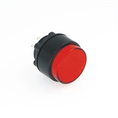

Limit Switch
Your Professional Limit Switch Supplier
We are a manufacturer of all kinds of pushbutton switches. From the factory - direct to the hands of consumers, here we save (total distribution-wholesalers-stores) and other channels, for you to provide a simple direct and effective supply! Besides our existing molded products, YongYuan also can production of products according to the drawings or samples from our customers.


Why Choose Us
24-Hour Service
Our dedicated 24-hour online support ensures prompt responses, providing you with an excellent shopping experience. Feel free to reach out with any questions at any time.
Professional technical support
We have an experienced technical team that can provide comprehensive technical support from product design and process optimization to maintenance.
Our Certificate
Under the strict management of ISO9001 quality system, environmental system ISO14001, the company's products have passed a series of international standard certificates such as UL, VDE, CCC, CE (LVD), CE (EMC).
Customized solutions
Every customer is unique, which is why we offer tailored solutions to meet your specific requirements. We offer technical support that is second to none.We take pride in our rapid response and flexibility to ensure your needs are met.
Advantages of Limit Switches

Precision
Limit switches provide precise control and repeatability, making them ideal for applications that require accurate position detection.

Wide Range of Applications
From simple home automation systems to complex industrial machinery, limit switches can be adapted to suit a variety of needs.

High Reliability
Limit switches are highly reliable and capable of operating in harsh conditions. Their robust construction ensures long operational life, even in environments with extreme temperatures, dust, or moisture.

Cost-Effectiveness
Compared to other types of sensors, limit switches are relatively inexpensive and easy to install. This makes them a popular choice in industrial applications where cost is a significant consideration.
Types of Limit Switches
Plunger-Type Limit Switch
Features a plunger actuator that is pressed when the target object makes contact. These are suitable for precise position detection.
Lever-Type Limit Switch
Contains a lever arm with a roller or ball on its end. When the moving part touches the lever, the switch is actuated. This type is commonly used in conveyor systems or automated assembly lines.
Rotary Limit Switch
Utilizes a rotating actuator that is turned by the movement of machinery parts. It is typically employed in applications where rotational motion is involved, such as cranes or hoisting devices.
Proximity Limit Switch
A non-contact switch that detects objects using electromagnetic fields or light (optical). It is widely used in environments where cleanliness or non-intrusive sensing is required.
Product Description
|
Operating Speed |
0.1mm-1m/s |
|
Operating Frequency |
Mechanical:600 times/min |
|
Electrical:30 times/min |
|
|
Insulation Resistance |
100MΩ (Above) DC500V |
|
Contact Resistance |
25mΩ (initial value) |
|
Withstand Voltage |
Non-connection wire:1000VAC |
|
Every terminal: 1500VAC |
|
|
Life |
Electrical: 100,000 times above |
|
Mechanical: 1,000,000 times above |
|
|
Operating Temperature |
-25-80℃ |
|
Operating Humidity |
<85% |
components of Limit Switch
Actuator
This is the limit switch section that would make contact with the object.
Head
This section of the limit switch would convert the actuator movement to the contact movement. So if the actuator is moved properly then the switch contact would operate according to it.
Contact block
This part of the limit switch would cover the electrical contact element of the switch. Mostly it has two or four contact pairs.
Terminal block
This part has the screw terminations, and this is the place where the switch and the rest of the control circuits make the electrical connections.
Switch body
This section of the limit switch would cover the contact and terminal block.
Base
This section of the limit switch would house the terminal block in a plug-in switch.
How a limit switch works

-
Physical contact
An object or machine part contacts an actuator on the limit switch.
-
Switch activation
This contact mechanically triggers an electrical switch.
-
Electrical signal
Depending on its configuration, the switch either opens or closes an electrical circuit.
-
Control or indication
This signal controls machinery, provides safety interlocks, or counts objects.
Applications of Limit Switches
Automated Production Lines: In manufacturing, limit switches are essential for controlling automated machinery. They detect the position of mechanical components, ensuring the safe and efficient operation of processes like assembly, packaging, and material handling.
Safety Mechanisms in Machines: Limit switches are often used as safety devices to prevent machinery from exceeding certain operating limits.
Elevator Systems: Limit switches play a critical role in the control and safety of elevators. They detect the position of the elevator car, ensuring that it stops accurately at each floor and that doors operate correctly without collisions.
Automated Doors and Gates: Many automatic doors, gates, and barriers use limit switches to detect the open or closed position, controlling motorized systems and ensuring that the door does not overextend or remain open when it should be closed.
Smart Home Applications: Limit switches are used in various smart home devices such as automated blinds, garage doors, and home security systems. These switches can detect whether a door or window is fully opened or closed and provide signals to the control system to initiate the appropriate response.
Agricultural and Heavy Machinery: In equipment such as tractors, harvesters, and mining machinery, limit switches are often used to monitor the movement of parts like arms, blades, or lifts, ensuring safe operation in challenging environments.
Robotics: In robotics, limit switches ensure that robot arms and other components operate within safe, predefined boundaries. They can be used to limit the range of motion of a robotic arm, preventing mechanical overload or collisions.
FAQ
We're professional limit switch manufacturers in China, providing customized limit switch for sale. Feel free to wholesale limit switch and get quotation from our factory.