


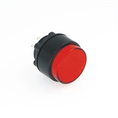

Buzzer
Your Professional Buzzer Supplier
We are a manufacturer of all kinds of pushbutton switches. From the factory - direct to the hands of consumers, here we save (total distribution-wholesalers-stores) and other channels, for you to provide a simple direct and effective supply! Besides our existing molded products, YongYuan also can production of products according to the drawings or samples from our customers.

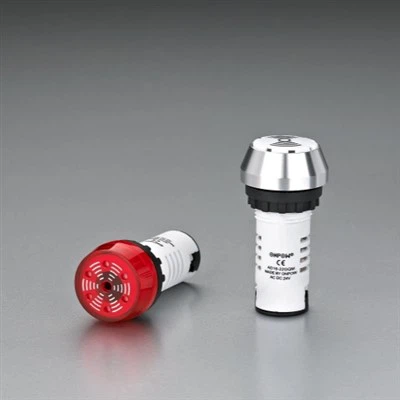


Why Choose Us
24-Hour Service
Our dedicated 24-hour online support ensures prompt responses, providing you with an excellent shopping experience. Feel free to reach out with any questions at any time.
Professional technical support
We have an experienced technical team that can provide comprehensive technical support from product design and process optimization to maintenance.
Our Certificate
Under the strict management of ISO9001 quality system, environmental system ISO14001, the company's products have passed a series of international standard certificates such as UL, VDE, CCC, CE (LVD), CE (EMC).
Customized solutions
Every customer is unique, which is why we offer tailored solutions to meet your specific requirements. We offer technical support that is second to none.We take pride in our rapid response and flexibility to ensure your needs are met.

Advantages of Buzzer
Because there is no movable contact part, it has long service life and high reliability. It can be used continuously for more than 10000 hours. It is a semi permanent device.
No arcing or RF noise, no interference to other lines.
No large vibration due to loosening.
With electronic circuit control, so it can produce a variety of pleasant sound and analog sound, intermittent sound. The timbre is pure and not easy to be covered by noise.
It is excited by voltage, so the current consumption is small, generally less than 20mA, not more than 100mA.
Small and loud. The volume can reach 70 dB / 20 cm, and the thickness of the element is only less than 1 mm.
Wide operating temperature range.
Piezoelectric
As the name suggests, the piezoelectric type uses the piezoelectric ceramic’s piezoelectric effect & pulse current to make the metal plate vibrate & generate sound. This kind of buzzer is made with a resonance box, multi resonator, piezoelectric plate, housing, impedance matcher, etc. Some of the buzzers are also designed with LEDs.
Electromagnetic
This type of buzzer is made with a magnet, solenoid coil, oscillator, housing, vibration diaphragm, and magnet. Once the power supply is given, the oscillator which produces the audio signal current will supply throughout the solenoid coil to generate a magnetic field.
Mechanical
These types of buzzers are subtypes of electromagnetic, so the components used in this type are also similar. But the main difference is that the vibrating buzzer is placed on the outside instead of the inside.
Electromechanical
The designing of these types of buzzers can be done with a bare metal disc & an electromagnet. The working principle of this is similar to magnetic and electromagnetic. It generates sound throughout the disc movement & magnetism.
Magnetic
Like a piezo type, magnetic is also used to generate a sound but they are different due to core functionality. The magnetic type is more fixed as compared to the piezo type because they work through a magnetic field.
How a Buzzer Works
Power Source: The buzzer requires a power source to operate, typically a direct current (DC) supply.
Electromagnetic Coil: Inside the buzzer, there is an electromagnetic coil. When electricity is supplied, the coil becomes magnetized.
Metal Diaphragm: Adjacent to the coil, there's a metal diaphragm. This diaphragm is usually made from a ferromagnetic material, which means it's attracted to magnets.
Operation Mechanism: When the current flows through the coil, it creates a magnetic field. This magnetic field causes the metal diaphragm to be attracted towards the coil, moving away from its original position.
Sound Production: As the diaphragm moves, it compresses and rarefies the air in front of it, creating sound waves. The rapid movement back and forth of the diaphragm produces the buzzing sound we hear.
Oscillation: In some buzzers, particularly piezoelectric types, the electric current causes the piezoelectric material (usually a ceramic disc) to bend back and forth. This bending motion creates the sound. The frequency of the current determines the frequency of the sound, and thus its pitch.
Volume Control: The volume of the sound can often be controlled by the amount of current supplied to the buzzer. Higher currents produce a louder sound.
Basic Troubleshooting Steps of Buzzer
Check Electrical Connections
Verify that the doorbell's electrical connections are all securely fastened and soldered. No sound or sporadic sound issues may be caused by loose or corroded connections. Verify that the power supply and control circuitry are correctly connected to the power cord.
Verify Power Supply
To make sure the power supply voltage and current match the doorbell specifications, check them. A low-quality power source can result in distorted, silent, or barely audible sound. Make that the voltage at the buzzer terminals is within the permitted range by measuring it with a multimeter.
Inspect the Buzzer
Examine the doorbell visually for any signs of physical harm, such as burns, nicks, or cracks. Sound reproduction may be impacted by diaphragm or piezoelectric crystal damage.
Test the Driving Signal
Check to make sure the doorbell is receiving the proper drive signal. To examine a signal's frequency, amplitude, and waveform, use an oscilloscope. Verify that the signal complies with the doorbell's operational requirements. Incorrect signals can cause distorted sound or unexpected tones.
Ensure Proper Mounting
Verify that the doorbell is mounted properly, without experiencing any undue vibration or mechanical strain. A misplaced installation could result in distorted or skipped sound. Secure the buzzer firmly in place to maintain consistent performance.
Replace the Buzzer
All other troubleshooting methods are unsuccessful. Think about getting a new doorbell. The chime may get weaker and less effective with time. A new buzzer can help determine if the issue lies with the component itself.
Applications of Buzzers
Consumer Electronics
Alarm timepieces with audio cautions employ a loud, repetitious tone to help customers wake up incontinently by reminding them of their set wake-up time. timekeepers, like those set up in exercise outfit and kitchen appliances, employ audile cautions to indicate when a set quantum of time is about to expire, furnishing an audile advisement to the user to take action.
Industrial Applications
In settings that are industrial It performs crucial duties like safety alarm, machine notification, and audio warning. As soon as a machine malfunctions, an alarm will go off. Too much heat is present. any other anomalies in operation aids in avoiding mishaps and equipment damage. When there is a fire, gas leak, or hazardous working conditions, a safety alarm with a buzzer is utilized to warn workers.
Automotive Uses
Warning signals, such as seatbelt reminders and door-open alerts, use buzzers to prompt immediate corrective actions, enhancing vehicle safety. Indicator sounds produced by buzzers inform drivers of active turn signals, ensuring proper communication with other road users. In order to ensure correct communication with other users of the road, parking sensors also use audible alerts to report the presence of nearby obstacles.

FAQ
We're professional buzzer manufacturers in China, providing customized buzzer for sale. Feel free to wholesale buzzer and get quotation from our factory.