

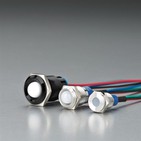


Switches are everywhere-from homes and offices to industrial machines and smart devices. Yet many buyers still ask a simple but important question: what are the 4 types of switches?
Understanding these categories helps you choose the right component for performance, safety, and long-term reliability. In this guide, we'll break down the 4 main types of switches, explain how they work in real applications, and help you decide which type fits your needs-especially if you are looking for push button switches.
1. SPST (Single Pole Single Throw) Switch
The SPST switch is the simplest type of switch.
It works like a basic ON/OFF control:
- ON → circuit is closed
- OFF → circuit is open
Think of it as a simple light switch in a room.
Where it is used:
- Basic lighting systems
- Power control circuits
- Simple appliances
- Industrial ON/OFF control panels
Why it matters:
SPST switches are reliable, easy to install, and widely used in everyday electrical systems. Many push button switches also use SPST configuration for straightforward ON/OFF control.
2. SPDT (Single Pole Double Throw) Switch
An SPDT switch allows one input to connect between two different outputs.
In simple terms:
- One common input
- Two selectable output paths
Where it is used:
- Signal routing systems
- Electrical mode selection
- Automotive circuits
- Control systems
Why it matters:
SPDT switches are useful when you need to switch between two functions or devices. In modern applications, compact push button switches can also be designed with SPDT functionality for more advanced control logic.
4. DPDT (Double Pole Double Throw) Switch
The DPDT switch is the most flexible of the four types.
It controls:
- Two circuits (double pole)
- Each with two possible outputs (double throw)
This allows complex switching functions like reversing polarity or controlling multiple systems.
Where it is used:
- Motor direction control
- Automation systems
- Robotics
- Advanced industrial equipment
Why it matters:
DPDT switches are essential in applications that require directional control or multiple switching states. Many advanced push button switches used in industrial control panels adopt DPDT designs for maximum flexibility.
Quick Comparison of the 4 Types of Switches
| Type | Full Name | Function | Common Use |
| SPST | Single Pole Single Throw | Simple ON/OFF | Lights, basic circuits |
| SPDT | Single Pole Double Throw | Switch between 2 outputs | Signal selection |
| DPST | Double Pole Single Throw | Controls 2 circuits | Industrial power control |
| DPDT | Double Pole Double Throw | Controls & switches 2 circuits | Motors, automation |
Where Push Button Switches Fit In
Today, push button switches are not a separate category of electrical function-they are a modern physical design style that can include SPST, SPDT, DPST, or DPDT configurations.
That means when choosing a push button switch, you're really choosing:
- The mechanical type (button style)
- The electrical function (SPST/SPDT/DPST/DPDT)
This is why push button switches are widely used in both simple and advanced systems.
Why Push Button Switches Are So Popular Today
Modern engineers and product designers often prefer push button switches because they offer:
- Clean, modern appearance
- Durable mechanical structure
- Clear tactile feedback
- Easy integration into panels
- Wide configuration options (momentary or latching)
They are used in:
- Industrial control panels
- Smart home devices
- Machinery interfaces
- Automotive systems
- Electrical equipment
Choosing the Right Switch for Your Application
Before selecting a switch, consider:
1. Electrical function
Do you need:
Simple ON/OFF (SPST)
Switching between functions (SPDT)
Multi-circuit control (DPST / DPDT)
2. Environment
Indoor or outdoor
Waterproof or dustproof requirements
Industrial or consumer use
3. Operation style
Momentary push
Latching (stay ON/OFF)
4. Load requirements
Voltage
Current rating
AC or DC compatibility
Getting these right ensures long-term stability and safety.
A Practical Note on Quality (ONPOW)
When reliability matters, build quality becomes just as important as switch type.
Manufacturers like ONPOW specialize in durable push button switches designed for industrial and commercial use. Their products are widely used in control panels and equipment where stability and long service life are essential.
Depending on the model, ONPOW push button switches may offer:
- Metal housing options
- High IP protection ratings
- Multiple electrical configurations (SPST to DPDT)
- LED illumination options
- Long mechanical life cycles
It's not about over-specifying-it's about choosing a switch that won't fail when it matters most.

Final Thoughts
So, what are the 4 types of switches?
They are:
- SPST
- SPDT
- DPST
- DPDT
Each serves a different purpose, from simple ON/OFF control to complex industrial switching.
And while the internal electrical types matter most, push button switches have become one of the most practical and widely used formats thanks to their durability, versatility, and modern design.
Choosing the right switch isn't just about function-it's about matching the right type to real-world conditions, ensuring safety, performance, and ease of use over time.