

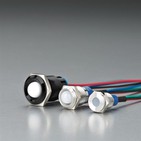


The short answer is no. Momentary switches do not stay on. They only remain active while the button is being pressed. Once you release the button, an internal spring automatically returns the switch to its original position, causing the circuit to open or close back to its default state.
This temporary operation is exactly what makes a momentary push button ideal for applications that require quick, controlled electrical signals instead of continuous power.
In this guide, you'll learn how momentary switches work, why they don't stay on, where they're commonly used, and how to choose the right one for your project.
What Is a Momentary Push Button?
A momentary push button is a switch designed to change the state of an electrical circuit only while pressure is applied.
Unlike a maintained or latching switch, it does not lock into the ON position. Instead, it automatically returns to its original state as soon as you release the button.
This simple mechanism makes momentary push button switches reliable, easy to use, and suitable for thousands of electronic and industrial applications.
Why Don't Momentary Switches Stay On?
The reason is built into the switch's internal design.
Inside every momentary push button is a spring mechanism. When you press the button, the electrical contacts move together (or separate, depending on the contact type), allowing the circuit to change state.
As soon as you remove your finger, the spring pushes the actuator back to its starting position, restoring the circuit to its normal condition.
This automatic reset helps prevent equipment from remaining activated unintentionally.
Normally Open vs. Normally Closed Momentary Switches
Not all momentary push button switches work exactly the same way. The two most common configurations are:
Normally Open (NO)
A Normally Open switch does not conduct electricity until the button is pressed.
Typical applications include:
Doorbells
Machine start buttons
Elevator controls
Computer power buttons
Normally Closed (NC)
A Normally Closed switch conducts electricity in its default state. Pressing the button temporarily interrupts the circuit.
These switches are often used in:
Safety circuits
Emergency stop monitoring
Alarm systems
Industrial control equipment
Choosing between NO and NC depends entirely on how your circuit is designed.
Momentary Switch vs. Latching Switch
Many buyers confuse momentary push buttons with latching switches because they often look nearly identical.
The biggest difference is how they behave after being pressed.
| eature | Momentary Push Button | Latching Push Button |
| Stays ON after pressing | No | Yes |
| Returns automatically | Yes | No |
| Requires continuous pressure | Yes | No |
| Best for | Temporary signals | Continuous ON/OFF control |
If your device only needs a brief electrical signal, a momentary push button is usually the correct choice.
Common Applications of Momentary Push Buttons
Because they only activate while pressed, momentary push button switches are widely used in many industries.
Industrial Automation
Operators use them to:
Start machines
Reset equipment
Trigger testing procedures
Control automation systems
Consumer Electronics
You'll find momentary push buttons in products such as:
Remote controls
Computer power buttons
Kitchen appliances
Audio equipment
Smart home devices
Automotive Systems
Modern vehicles rely on momentary push button switches for functions like:
Engine start buttons
Horn controls
Steering wheel buttons
Dashboard controls
Medical Equipment
Medical devices often require temporary user input for precise control, making momentary switches an excellent solution.
How to Tell If a Switch Is Momentary
If you're unsure whether your switch is momentary or latching, here are a few simple ways to check.
Press the button and release it.
If it immediately returns to its original position, it's a momentary push button.
If it stays pressed or remains in the new electrical state, it's a latching switch.
You can also check the product specifications, which typically identify the switch as "Momentary" or "Maintained."
How to Choose the Right Momentary Push Button
Selecting the right momentary push button involves more than choosing the correct size.
Here are a few key factors to consider.
Mounting Diameter
Common panel cutout sizes include:
12mm
16mm
19mm
22mm
25mm
30mm
Contact Configuration
Choose the contact arrangement that matches your circuit.
Common options include:
1NO
1NC
1NO1NC
2NO2NC
LED Illumination
Illuminated momentary push button switches improve visibility and user experience.
Popular LED colors include:
Red
Green
Blue
Yellow
White
Orange
Environmental Protection
For outdoor or industrial environments, choose switches with protection ratings such as IP65 or IP67 to resist dust and water.
Housing Material
Metal push buttons made from stainless steel or aluminum alloy offer excellent durability and are ideal for demanding applications.
Choosing a Reliable Supplier Matters
Even though a momentary push button is a relatively small component, its performance can directly affect the reliability of your equipment.
When selecting a supplier, look for products with:
Long mechanical life
Stable electrical performance
High-quality contact materials
Waterproof and dustproof options
International certifications
ONPOW has specialized in industrial push button switches for decades, offering a broad range of momentary push button models with multiple mounting sizes, contact configurations, LED options, and durable metal housings. Whether you're building industrial machinery, control panels, or commercial equipment, choosing a reliable switch helps improve long-term system performance and reduce maintenance costs.

Frequently Asked Questions
Do momentary switches stay on after you press them?
No. Momentary switches do not stay on. They automatically return to their default position when released.
Can a momentary switch be used as an ON/OFF switch?
Generally, no. If you need the circuit to remain ON after pressing the button, a latching switch is the better choice.
Are all push button switches momentary?
No. Push button switches are available in both momentary and latching versions, so it's important to select the correct type for your application.
Why are momentary switches so common?
Their automatic reset, simple operation, and reliable performance make them suitable for industrial equipment, electronics, automotive systems, and many other applications.
Can momentary push buttons be waterproof?
Yes. Many industrial momentary push button switches are available with IP65 or IP67 protection, making them suitable for harsh environments.
Conclusion
So, do momentary switches stay on? The answer is no. A momentary push button is specifically designed to activate a circuit only while it is being pressed, then automatically return to its normal state when released.
This simple yet reliable operation makes momentary push button switches an excellent choice for applications that require temporary electrical signals, from industrial automation and automotive controls to consumer electronics and commercial equipment. By understanding how they work and selecting the right specifications, you can ensure dependable performance and long-lasting reliability for your project.