

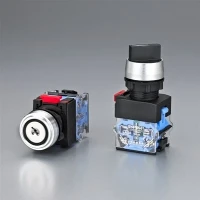

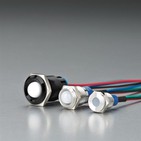

Key switches are widely used in industrial equipment, control panels, electrical systems, and security devices where reliable operation and controlled access are important. Unlike ordinary push button switches, many key switches require a physical key to operate, helping prevent unauthorized or accidental operation.
However, not all key switches work in the same way. Some have two or three operating positions, while others are designed to maintain a selected state, control electrical circuits, or provide additional security.
So, what are the different types of key switches? And how do you choose the right one for your application?
This guide explains the main types of key switches, how they work, their common applications, and the key factors to consider before purchasing.
1. What Is a Key Switch?
A key switch is an electrical switch operated by inserting and turning a matching key. Turning the key changes the internal contact state, allowing or interrupting the flow of electricity in a circuit.
The key-operated mechanism provides an additional level of control because only someone with the appropriate key can normally operate the switch.
Key switches are commonly installed on:
- Industrial control panels
- Machinery and production equipment
- Access control systems
- Electrical cabinets
- Elevators and automatic doors
- Security and monitoring equipment
Depending on the design, a key switch can control power, select an operating mode, enable equipment, or restrict access to certain functions.

2. What Are the Different Types of Key Switches?
Key switches can be classified by their operating positions, contact configurations, key removal positions, and installation requirements. Understanding these differences makes it easier to select a suitable switch.
Here are the most common types.
2.1 Two-Position Key Switch
<Insert image of a two-position key switch>
A two-position key switch has two operating positions, usually marked ON/OFF, 0/1, or STOP/RUN.
When the key is turned from one position to the other, the internal contacts change state. Depending on the model, the key may be removable in one position or both positions.
Typical applications:
- Machine power control
- Equipment activation and shutdown
- Electrical cabinet control
- Access-controlled operating systems
This type is a practical choice when an application only requires two operating states, such as enabling or disabling a machine.
2.2 Three-Position Key Switch
<Insert image of a three-position key switch>
A three-position key switch provides three operating positions, commonly arranged as left, center, and right.
For example, a switch may be configured as:
- OFF – MANUAL – AUTO
- LOCAL – OFF – REMOTE
- STOP – RUN – RESET
The actual functions depend on the electrical contact arrangement and application requirements.
Three-position key switches are particularly useful when operators need to select between different machine operating modes without installing multiple individual switches.
Typical applications:
- Industrial automation systems
- Machine control panels
- Manual and automatic control systems
- Local and remote operation
When purchasing this type, check whether the positions are maintained or spring-return, as this affects how the switch behaves after the key is turned.
2.3 Maintained Key Switch
A maintained key switch stays in the selected position after the key is released.
For example, when an operator turns the key to ON, the switch remains in that position until someone turns it back to OFF.
This design is useful when equipment needs to remain enabled or disabled without requiring continuous operator action.
Typical applications:
- Power control systems
- Industrial machinery
- Security systems
- Equipment mode selection
Maintained key switches are commonly used where a stable operating state is required.
2.4 Spring-Return Key Switch
A spring-return key switch automatically returns to its original position when the key is released.
For example, an operator may turn the key to START to activate a temporary function. Once released, the switch returns to its normal position.
This type is suitable for operations that should only be triggered momentarily.
Typical applications:
- Machine starting circuits
- Reset functions
- Temporary control commands
- Certain access control operations
One important point: spring-return key switches and maintained key switches serve different purposes. Before ordering, confirm whether the application requires a temporary command or a continuously maintained state.
2.5 Key Switches with Different Contact Configurations
In addition to operating positions, contact configuration is another important factor when choosing a key switch.
Common contact configurations include:
- SPST (Single Pole Single Throw): Controls one electrical circuit with a simple ON/OFF function.
- SPDT (Single Pole Double Throw): Switches one common circuit between two output paths.
- DPST (Double Pole Single Throw): Controls two separate circuits simultaneously.
- DPDT (Double Pole Double Throw): Switches two circuits between two different output paths.
The correct contact configuration depends on the number of circuits being controlled and how the equipment is wired.
For buyers, it is important to check the number of poles, contact arrangement, NO (Normally Open) and NC (Normally Closed) contacts, and electrical ratings rather than selecting a switch based only on its appearance.
3. Key Switch Types Compared
The following table summarizes the main differences to help you identify which type may suit your application.
| Type | Main Feature | Typical Application |
|---|---|---|
| Two-position key switch | Two operating positions | ON/OFF control |
| Three-position key switch | Three operating positions | Manual/Auto/Off selection |
| Maintained key switch | Stays in the selected position | Power and mode control |
| Spring-return key switch | Returns automatically when released | Start and reset functions |
| SPST key switch | Controls one circuit | Basic electrical control |
| SPDT key switch | Switches one circuit between two outputs | Circuit selection |
| DPST key switch | Controls two circuits simultaneously | Multiple circuit control |
| DPDT key switch | Switches two circuits between two output paths | More complex circuit control |
Note: These classifications can overlap. For example, a three-position key switch can also have a maintained or spring-return operating mechanism and a specific contact configuration.
4. Where Are Key Switches Commonly Used?
Because they combine electrical control with key-operated access, key switches are used in a wide range of industries.
Here are some common examples.
Industrial Machinery
Key switches are often installed on production equipment to enable or disable machine operation, select operating modes, or restrict access to specific controls.
Elevators and Automatic Doors
In elevator systems and automatic doors, key switches may be used for authorized functions such as selecting special operating modes or enabling maintenance-related operations.
Electrical Control Cabinets
Key switches can help prevent unauthorized operation of electrical equipment and provide controlled access to specific functions.
Access Control Systems
In certain access control applications, key switches are used to activate or deactivate specific functions, providing a simple physical control method.
Automation Equipment
Automated production lines may use key switches to select between manual, automatic, and maintenance modes, depending on the control system design.
5. Why Choose ONPOW Key Switches?

When sourcing key switches for industrial equipment, buyers often need more than a standard product. Installation dimensions, electrical configurations, operating positions, and environmental requirements can all affect product selection.
ONPOW specializes in industrial control switches and provides solutions for different control panel and equipment applications.
Depending on the product model, available options may include:
- Different mounting hole sizes and panel designs
- Multiple operating positions and key configurations
- Various contact arrangements
- Different electrical ratings
- Customization options to meet specific application requirements
If you are looking for a key switch manufacturer for an OEM or ODM project, it is worth confirming the required operating positions, contact configuration, mounting dimensions, and environmental conditions before selecting a model.
The right specifications can help reduce installation difficulties and ensure better compatibility with your equipment.