


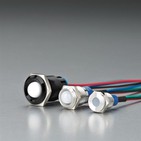


A selector switch is operated by turning a knob or handle to choose between two or more operating positions. Each position corresponds to a specific function, allowing an operator to control a machine, select an operating mode, or switch between different circuits.
For example, a selector switch on an industrial machine may let an operator choose between Manual and Automatic modes. On another device, it might be used to select Forward, Stop, or Reverse, depending on the control circuit design.
Although operating a selector switch is usually simple, choosing the right type requires a good understanding of its positions, contact configuration, and application.
1. How Does a Selector Switch Work?
A selector switch works by changing its electrical contact connections when the operator moves the knob from one position to another.
In a typical industrial application, the process is straightforward:
- Turn the knob: Move the handle to the desired position, such as Manual or Automatic.
- Change the contacts: The internal mechanism opens or closes specific electrical contacts.
- Send a control signal: The changed contact state signals the control system or activates the corresponding circuit.
- Perform the selected function: The machine responds according to its control logic.
For example, when an operator turns a selector switch from Manual to Automatic, the switch changes the relevant contact state. The control system then enables the selected operating mode, provided that the required conditions are met.
Important: A selector switch does not necessarily power a machine directly. In many industrial control panels, it sends a signal to a PLC, relay, or contactor that controls the equipment.
2. What Are the Different Operating Positions of a Selector Switch?
The number of positions depends on the switch design and the control task. Common configurations include two-position and three-position selector switches.
| Selector Switch Type | Typical Positions | Common Application |
| 2-position selector switch | ON/OFF or Manual/Automatic | Basic mode selection |
| 3-position selector switch | Forward/Stop/Reverse or Manual/Off/Automatic | Machine and motor control |
| Multi-position selector switch | Several predefined settings | Equipment with multiple operating modes |
These are examples rather than fixed rules. A selector switch can have different labels and functions depending on how its contacts are wired.
For instance, a two-position selector switch may be designed for Manual/Automatic operation, while a three-position model may support Local/Off/Remote control.
When choosing a switch, check both the number of mechanical positions and the number of electrical circuits it can control. These are related but different specifications.

3. What Happens When You Turn a Selector Switch?
The result depends on the switch's operating mechanism and contact arrangement.
Maintained Selector Switch
A maintained selector switch stays in the selected position after the operator releases the knob.
For example, when you turn it to Automatic, it remains in that position until someone moves it again.
This type is widely used for:
- Manual/Automatic mode selection
- Local/Remote control
- ON/OFF circuit selection
- Enabling or disabling specific operating modes
Spring-Return Selector Switch
A spring-return selector switch returns to a designated position when the operator releases it.
For example, an operator may turn the switch temporarily to a test or reset position, after which the spring returns the handle to its normal position.
This type is useful when a temporary command is required rather than a continuously maintained setting.
Before purchasing, confirm the operating mechanism. A maintained switch and a spring-return switch may look similar but behave differently during operation.
4. How Do You Wire a Selector Switch?
The wiring determines what each selector position actually does.
Many industrial selector switches use normally open (NO) and normally closed (NC) contacts.
Normally open (NO): The contact is open in its normal, unactuated state and closes when the mechanism operates it.
Normally closed (NC): The contact is closed in its normal, unactuated state and opens when the mechanism operates it.
The exact contact state at each selector position depends on the switch design.
Consider a Manual/Automatic selector switch:
- In Manual mode, one contact may signal the controller to enable manual operation.
- In Automatic mode, another contact may signal the controller to enable automatic operation.
- The control circuit determines how the machine responds to these signals.
Some selector switches have one contact block, while others can accommodate multiple contact blocks to support more complex control functions.
When selecting a model, verify the contact configuration, terminal layout, electrical ratings, and wiring diagram. Never assume that switches with the same appearance have identical terminal assignments.
Safety note: Disconnect the power supply before installing or wiring a selector switch. Electrical installation should be performed by qualified personnel in accordance with applicable safety requirements.
5. How Do You Choose the Right Selector Switch?
If you are selecting a selector switch for an industrial control panel or piece of equipment, consider these five factors.
1. Number of Positions
Determine how many operating modes the equipment requires. A two-position switch may be sufficient for Manual/Automatic control, while a more complex application may need three or more positions.
2. Contact Configuration
Check whether the control circuit requires NO contacts, NC contacts, or a combination of both. Also confirm the number of contact circuits needed for the application.
3. Electrical Ratings
Verify the rated voltage, current, and applicable load category. Switching a low-current PLC input is different from directly switching a motor or another high-power load.
Make sure the switch is suitable for the actual electrical load and control circuit.
4. Mounting Size and Installation
For panel-mounted equipment, check the required mounting hole diameter, panel thickness, available installation space, and terminal arrangement.
Common mounting sizes vary by product series, so confirm the manufacturer's specifications before ordering.
5. Environmental Protection and Durability
For machinery used outdoors, in wet areas, or in demanding industrial environments, consider the required IP rating, housing material, mechanical durability, and resistance to oil or other environmental conditions.
Also check whether the switch offers the operating mechanism and service life required for your application.
7. Where Are Selector Switches Commonly Used?
Selector switches are widely used wherever operators need to choose between different functions or operating modes.
Typical applications include:
Industrial automation: Switching between Manual and Automatic modes.
Machine tools: Selecting operating functions or control modes.
Electrical control panels: Choosing Local or Remote operation.
HVAC systems: Selecting operating modes for ventilation or temperature control equipment.
Test equipment: Choosing between different test settings or operating conditions.
Power and energy equipment: Selecting control modes, subject to the requirements of the specific electrical system.
The right selector switch should match the intended function, electrical design, and installation environment.
8. How Can You Find the Right Selector Switch for Your Application?
Before ordering, prepare a few basic details:
Required number of positions
Maintained or spring-return operation
NO/NC contact requirements
Rated voltage and current
Mounting hole diameter
Environmental protection requirements
Any special labeling, color, or installation needs
Providing this information makes it easier to identify a suitable model and reduces the risk of choosing a switch that does not fit the control circuit.
ONPOW offers selector switch solutions for industrial control and equipment applications. Depending on the product series, buyers can evaluate different operating positions, contact configurations, mounting options, and other specifications to suit their requirements. If a standard model does not meet your needs, contacting the manufacturer with your application details is a practical way to explore suitable options.
