

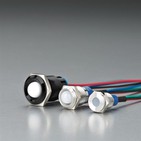


When choosing a push button switch, one of the most common questions buyers ask is:
Which is safer, NO (Normally Open) or NC (Normally Closed)?
The short answer is:
It depends on your application and what "safe" means in your system.
This guide will help you quickly understand the difference and make the right decision-especially if you're selecting momentary push buttons for industrial, commercial, or equipment use.
NO vs NC: What's the Difference?
Before talking about safety, let's clarify how each type works:
NO (Normally Open)
The circuit is off by default. It only closes (turns on) when you press the button.
NC (Normally Closed)
The circuit is on by default. It opens (turns off) when you press the button.
In simple terms:
NO = press to activate
NC = press to interrupt
Which Is Safer? It Depends on the Scenario
1. For Emergency Stop Systems → NC is Safer
In safety-critical systems like emergency stops:
NC (Normally Closed) is the safer choice
Why?
If a wire breaks or the button fails, the circuit opens automatically
The system shuts down instead of continuing to run
This is known as a fail-safe design
Typical use cases:
Emergency stop buttons
Industrial machinery safety circuits
Conveyor shutdown systems
If safety means "stop immediately when something goes wrong," choose NC
2. For Standard Control Functions → NO is Safer
For general operations:
NO (Normally Open) is usually safer and more practical
Why?
The system stays off unless intentionally activated
Prevents accidental startup
More intuitive for users ("press to start")
Typical use cases:
Start buttons
Doorbells
Control panels
Consumer electronics
If safety means "avoid accidental activation," choose NO
How This Applies to Momentary Push Buttons
Most momentary push buttons return to their original state after being pressed. That makes the NO vs NC decision even more important.
Quick Selection Guide:
| Application | Recommended Type |
| Emergency stop | NC |
| Start button | NO |
| Reset function | NO |
| Safety interlock | NC |
| Signal triggering | NO |
Common Mistakes Buyers Make
Mistake 1: Choosing Based on Habit
Many buyers default to NO without considering safety logic.
Always ask:"What should happen if the system fails?"
Mistake 2: Ignoring Wiring Logic
Using the wrong contact type can:
Cause unexpected behavior
Compromise safety systems
Mistake 3: Not Checking Contact Configuration
Some switches offer:
NO only
NC only
NO + NC combined
For flexibility, many engineers prefer combined contact configurations
Pro Tip: When in Doubt, Use Both
In more advanced systems, you don't have to choose just one.
Many momentary push buttons come with NO + NC contacts
This allows:
Dual control logic
Redundancy
More complex safety design
Choosing a Reliable Push Button Switch
Beyond NO vs NC, safety also depends on build quality:
Look for:
Stable contact performance
Long mechanical life
Clear tactile feedback
Proper IP rating (e.g., IP65/IP67 for harsh environments)
A Note on ONPOW Push Button Switches
If you're sourcing for industrial or commercial applications, ONPOW offers a wide range of push button switches designed with both NO and NC configurations, suitable for various safety scenarios.
Their switches are commonly used in:
Industrial automation
Control panels
Equipment interfaces
The focus is on reliability and consistent performance, which is just as important as choosing the right contact type.


Final Thoughts
So, which is safer-NO or NC?
NC is safer for fail-safe systems
NO is safer for controlled activation
There's no universal answer-only the right choice for your application.
Quick Takeaway
Emergency or safety-critical? → Choose NC
General control or activation? → Choose NO
Need flexibility? → Choose both (NO + NC)