

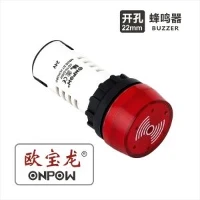

A buzzer is a simple but important component in many electronic and industrial devices. It produces an audible signal to alert users, indicate an operating status, or warn of a potential problem. However, not all buzzers work in the same way. Some generate sound through electromagnetic vibration, while others use piezoelectric technology.
So, what are the different types of buzzers, and how do you choose the right one for your application?
The most common types include piezoelectric buzzers, electromagnetic buzzers, active buzzers, and passive buzzers. They differ in their working principles, sound characteristics, power requirements, and control methods. Understanding these differences will help you select a suitable buzzer for your equipment or control panel.
1. What Are the Main Types of Buzzers?
Buzzers can be classified in different ways, depending on their working principle or how they are controlled.
From a buyer's perspective, two classifications are particularly useful:
- By working principle: Piezoelectric buzzers and electromagnetic buzzers.
- By control method: Active buzzers and passive buzzers.
These categories describe different characteristics, so they are not necessarily mutually exclusive. For example, a buzzer can be both piezoelectric and active.
Let's look at each type more closely.
2. Piezoelectric Buzzers
A piezoelectric buzzer produces sound using the piezoelectric effect. When an electrical voltage is applied to a piezoelectric ceramic element, it vibrates. These vibrations move the surrounding air and generate sound.
Piezoelectric buzzers are widely used in electronic equipment because they are compact, lightweight, and generally consume relatively little power.
Key features:
- Low power consumption.
- Compact size and lightweight construction.
- Relatively high sound output for their size.
- Long operating life when properly selected.
- Suitable for many electronic and industrial applications.
A piezoelectric buzzer is a good choice when you need a compact audible alarm with relatively low power consumption.
3. Electromagnetic Buzzers
An electromagnetic buzzer uses an electromagnetic coil to produce mechanical vibration. When current flows through the coil, it creates a magnetic field that attracts a metal diaphragm or moving component. The resulting vibration generates sound.
Compared with piezoelectric types, electromagnetic buzzers generally have different sound characteristics and electrical requirements.
Key features:
- Uses electromagnetic force to generate vibration.
- Can produce a relatively strong, distinctive sound.
- Often suitable for applications requiring audible warning signals.
- Available in different sizes and sound output levels.
When choosing an electromagnetic buzzer, pay attention to its rated voltage, current consumption, sound pressure level, and installation requirements.
4. Active Buzzers
An active buzzer has a built-in oscillation circuit, which means it can generate sound when the correct DC voltage is applied.
In most applications, you simply connect the buzzer to a suitable power supply, and it produces a sound at its designed frequency. You do not need to provide a separate oscillating signal.
Key features:
- Built-in oscillation circuit.
- Simple electrical control.
- Usually produces a fixed-frequency tone.
- Convenient for basic alarm and notification functions.
If you need a straightforward audible alarm that sounds when power is supplied, an active buzzer is often a practical option.
5. Passive Buzzers
Unlike active buzzers, a passive buzzer does not contain a built-in oscillation circuit. It requires an external electrical signal, usually a square-wave or PWM signal, to produce sound.
By changing the input signal frequency, you can control the buzzer's output tone. This makes passive buzzers more flexible when different sound patterns or tones are needed.
Key features:
- Requires an external driving signal.
- Sound frequency can be adjusted.
- Can produce different tones and sound patterns.
- Offers greater control flexibility than a typical active buzzer.
A passive buzzer is worth considering when your application requires multiple tones or more flexible sound control.
6. Active Buzzer vs. Passive Buzzer: What's the Difference?
Active and passive buzzers are often confused, especially when selecting components for electronic equipment. The main difference is whether the buzzer has its own oscillation circuit.
Here's a quick comparison:
| Feature | Active Buzzer | Passive Buzzer |
|---|---|---|
| Built-in oscillator | Yes | No |
| Input signal | DC voltage | External AC or pulsed signal |
| Sound frequency | Usually fixed | Adjustable |
| Control method | Apply suitable power | Supply a driving signal |
| Circuit design | Simpler | Requires additional control |
| Sound flexibility | Limited | More flexible |
| Typical use | Basic alarms and alerts | Multi-tone alarms and electronic projects |
Which one should you choose?
Choose an active buzzer if you want a simple alarm function without designing an additional signal-generation circuit.
Choose a passive buzzer if you need to control the sound frequency or generate different tones through a controller.
For most basic warning applications, an active buzzer is often easier to integrate. However, the best option ultimately depends on your control circuit and required sound output.
7. How to Choose the Right Buzzer for Your Application
Knowing the different types of buzzers is only the first step. Before purchasing one, you should also consider the actual operating conditions of your equipment.
Here are six important factors to check.
1. Operating Voltage
Voltage compatibility should be your first consideration. Common buzzer operating voltages include 3V, 5V, 12V, and 24V DC, although the available options depend on the product.
Make sure the buzzer's rated voltage matches your power supply. Applying an unsuitable voltage may cause poor sound performance or damage the component.
2. Sound Pressure Level
Sound pressure level (SPL), usually measured in decibels (dB), indicates how loud a buzzer sounds.
A buzzer used inside a quiet electronic device may not need the same sound output as one installed on industrial machinery in a noisy workshop.
Consider the surrounding noise level and the distance from which users need to hear the alarm.
3. Sound Frequency and Tone
Different applications require different audible signals.
For example:
- A continuous tone may indicate a general warning.
- An intermittent beep may be used for status notifications.
- Different tones can help distinguish between operating conditions or fault types.
Check whether you need a fixed-frequency sound or an adjustable tone.
4. Mounting Method and Size
The available installation space is another important factor, especially for compact control panels and electronic equipment.
Check the buzzer's dimensions, mounting structure, terminal type, and installation position before ordering.
If the buzzer needs to be installed on an equipment panel, make sure its mounting dimensions are compatible with the panel design.
5. Environmental Protection
For industrial applications, the operating environment can have a significant impact on buzzer performance.
Consider whether the buzzer will be exposed to:
- Dust or water.
- Oil or moisture.
- High or low temperatures.
- Vibration or mechanical impact.
If the equipment operates in a demanding environment, check the buzzer's IP protection rating and environmental specifications. Do not assume that all buzzers are waterproof or suitable for outdoor use.
6. Electrical Specifications and Service Life
Before placing an order, check the rated current, power consumption, operating frequency, and expected service life.
For industrial equipment, reliability is particularly important because a buzzer may serve as part of a fault warning or safety notification system.
It is also worth confirming whether the buzzer is intended for continuous operation or intermittent use.
8. Choosing the Right Buzzer for Industrial Applications
For industrial equipment, a buzzer is more than just a sound-producing component. It plays an important role in operator notifications, equipment status indication, and warning systems.
A suitable industrial buzzer should offer reliable sound output, compatible electrical specifications, and a construction that matches the installation environment.
ONPOW specializes in industrial push button switches and signal indicator products, and also offers buzzer solutions for equipment and control panel applications. When selecting a buzzer, buyers can consider the required operating voltage, sound characteristics, installation dimensions, and application conditions to identify a suitable configuration.
