What Materials Are Used in Push Button Switches?
The performance and lifespan of a push button switch depend not only on its design but also on the materials used in its construction. Different materials are selected to meet specific requirements such as durability, corrosion resistance, electrical conductivity, insulation, and environmental protection.
Here are the most common materials found in modern push button switches.
Stainless Steel
Stainless steel is widely used for metal push button switch housings because of its strength and durability.
It offers:
Excellent corrosion resistance
High mechanical strength
Good impact resistance
Long service life
Modern appearance
304 stainless steel is commonly used in industrial and commercial equipment, while 316 stainless steel is preferred in marine, chemical, and other harsh environments where additional corrosion resistance is required.
Brass
Brass is another popular material used for switch bodies and components.
Its advantages include:
Good electrical conductivity
Easy machining
Strong mechanical properties
Cost-effective production
To improve corrosion resistance and appearance, brass parts are often nickel-plated or chrome-plated.
Aluminum Alloy
Aluminum alloy is commonly chosen for applications that require a lightweight yet durable solution.
Benefits include:
Reduced weight
Attractive finish
Good heat dissipation
Easy surface treatment through anodizing
It is frequently used in electronic devices, control panels, and equipment with modern industrial designs.
Engineering Plastics
Many internal switch components are manufactured from engineering plastics because of their excellent insulation properties and durability.
PA66 (Nylon 66)
PA66 is commonly used for switch bases and structural parts.
Key characteristics include:
High strength
Wear resistance
Heat resistance
Excellent electrical insulation
Polycarbonate (PC)
Polycarbonate is often used for illuminated button caps and indicator lenses.
It provides:
High transparency
Strong impact resistance
Good light transmission
These properties make it ideal for LED-illuminated switches.
PBT
PBT is widely used for electrical insulation components inside switches.
It offers:
Dimensional stability
Heat resistance
Chemical resistance
Reliable electrical insulation
Contact Materials
The contacts inside a push button switch play a critical role in electrical performance.
Silver Alloy Contacts
Silver alloy is the most common contact material for general-purpose switches because it provides:
Low contact resistance
Good conductivity
Long electrical life
Reliable switching performance
Gold-Plated Contacts
Gold-plated contacts are typically used in low-current and signal-switching applications.
Their advantages include:
Resistance to oxidation
Stable signal transmission
Reliable operation in sensitive circuits
They are often found in medical equipment, communication systems, and precision electronics.
Sealing Materials
For waterproof push button switches, sealing materials are essential.
Silicone rubber is widely used because it offers:
Excellent flexibility
Resistance to temperature extremes
Long-term durability
Effective water and dust protection
Silicone seals help switches achieve protection levels such as IP65, IP67, and IP68.
LED Components
Illuminated push button switches also include materials designed for lighting performance, such as:
LED chips
Light guide components
Transparent lenses
Encapsulation materials
These components ensure clear and consistent illumination throughout the switch's operating life.
Selecting the Right Material
The best material depends on the operating environment.
For example:
Stainless steel is ideal for industrial, outdoor, and food-processing equipment.
316 stainless steel is recommended for marine applications.
Brass provides a practical and economical solution for many commercial products.
Engineering plastics offer excellent insulation and reliability for internal components.
Gold-plated contacts are suitable for low-current control circuits and signal applications.
Conclusion
A push button switch is made up of several different materials, each serving a specific purpose. Metal housings provide strength and durability, engineering plastics ensure insulation, contact materials guarantee reliable electrical performance, and sealing materials protect against dust and moisture.
By selecting the appropriate material combination, manufacturers can ensure that a push button switch performs reliably in a wide range of industrial, commercial, and environmental conditions.
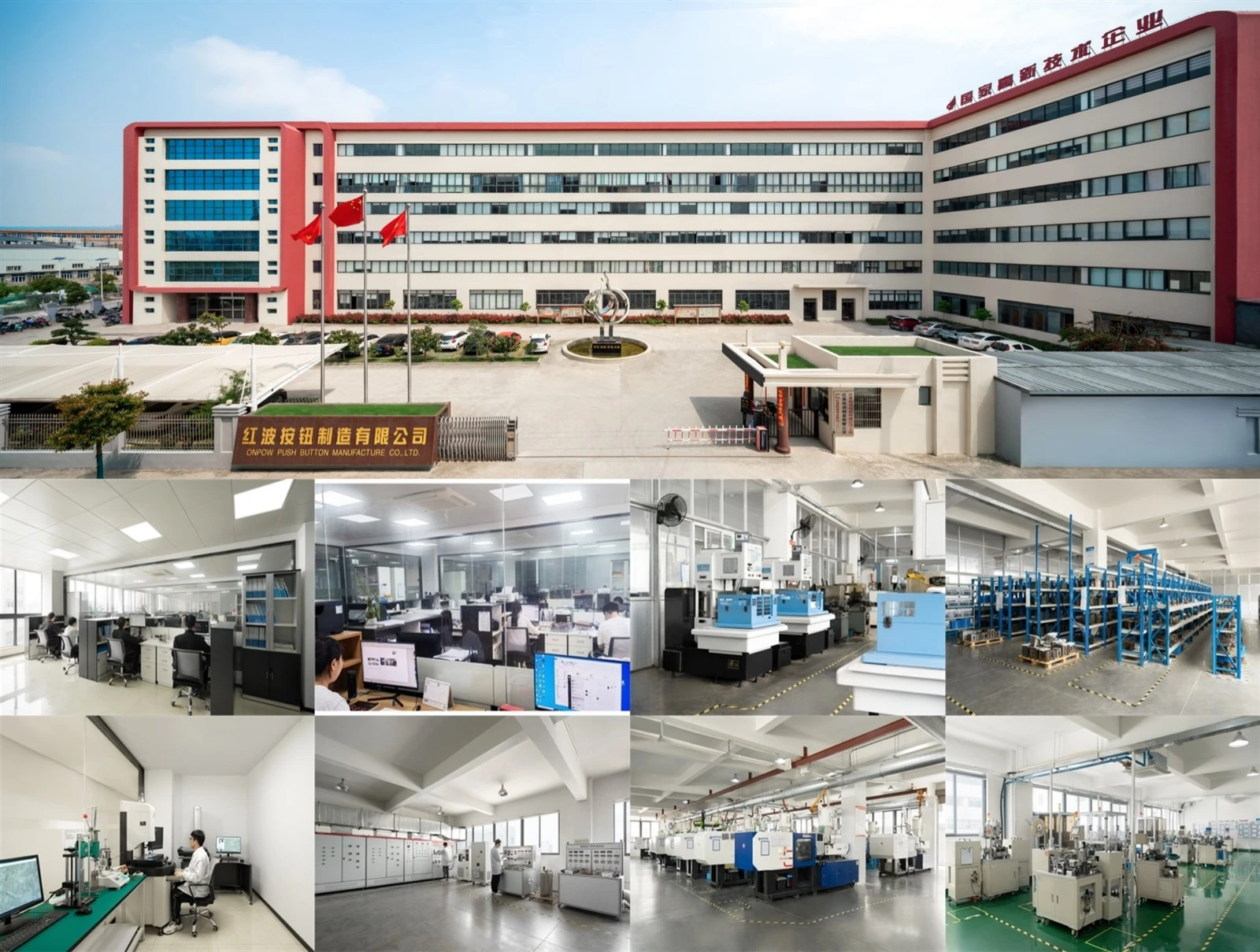
At ONPOW, we offer push button switches in stainless steel, brass, aluminum alloy, and engineering plastic constructions to meet the requirements of customers across various industries worldwide.