


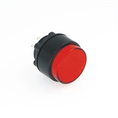

Capacitive Switch
Your Professional Capacitive Switch Supplier
We are a manufacturer of all kinds of pushbutton switches. From the factory - direct to the hands of consumers, here we save (total distribution-wholesalers-stores) and other channels, for you to provide a simple direct and effective supply! Besides our existing molded products, YongYuan also can production of products according to the drawings or samples from our customers.
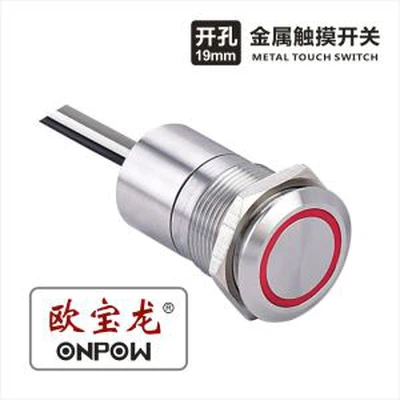

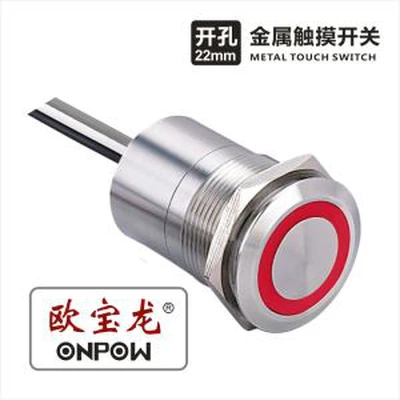
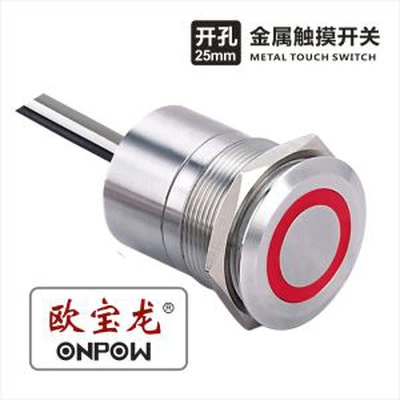


Why Choose Us
24-Hour Service
Our dedicated 24-hour online support ensures prompt responses, providing you with an excellent shopping experience. Feel free to reach out with any questions at any time.
Professional technical support
We have an experienced technical team that can provide comprehensive technical support from product design and process optimization to maintenance.
Our Certificate
Under the strict management of ISO9001 quality system, environmental system ISO14001, the company's products have passed a series of international standard certificates such as UL, VDE, CCC, CE (LVD), CE (EMC).
Customized solutions
Every customer is unique, which is why we offer tailored solutions to meet your specific requirements. We offer technical support that is second to none.We take pride in our rapid response and flexibility to ensure your needs are met.
Advantages of Capacitive Switch
Sleek and Modern Aesthetics
Capacitive touch switches are a designer’s dream. Unlike traditional mechanical buttons that require exposed moving parts or protruding components, capacitive switches feature flat, seamless surfaces. This allows for more minimalist, contemporary designs that align with modern consumer expectations.
Enhanced Durability and Reliability
One of the standout advantages of capacitive touch switch buttons is their exceptional durability. Because they lack mechanical moving parts, there’s less wear and tear over time. This makes them ideal for high-use environments where reliability is critical—like hospitals, factories, and public kiosks.
Easy Cleaning and Hygiene-Friendly
In industries where cleanliness is paramount, such as healthcare, food service, and cleanroom manufacturing, capacitive switches offer a major advantage. Their flat, sealed surfaces eliminate crevices where bacteria and grime can accumulate.
Improved User Experience
Capacitive touch switches provide a smoother, quieter, and more responsive interaction compared to tactile buttons. Users only need to lightly touch—or even get close to—the interface for it to respond, offering a futuristic and intuitive experience.
Water and Impact Resistance
Many capacitive switches are engineered to function even in wet conditions, making them suitable for kitchens, bathrooms, outdoor panels, and marine equipment. Advanced models can distinguish between actual human touch and water droplets, ensuring reliable operation even in the presence of moisture.
Customization and Flexibility
Capacitive switches are highly customizable in form and function. Manufacturers can design them in various shapes, sizes, and colors, and even integrate them into curved or flexible surfaces. This opens the door for product designers to innovate without being constrained by traditional switch mechanics.
Reduced Mechanical Failure and Longer Life Span
Traditional mechanical switches degrade with repeated use due to physical contact between components. In contrast, capacitive touch switches typically last longer because they don’t rely on physical actuation.
Integration with Smart Systems
Capacitive switches can be integrated with IoT and smart device systems, allowing them to control more than just on/off functions. For example, in a smart home setup, a capacitive touch switch might dim lights, activate appliances, or trigger automation scenes—all with a gentle tap.
Specification
|
Product Name |
Inductive proximity sensor |
|
Housing Material |
Stainless steel/brass nickel plating |
|
Switching Distance |
10/15/25/40/50mm |
|
Place of Origin |
China |
|
Type |
Inductive Proximity Sensor |
|
Switching Frequency |
300HZ/150HZ |
|
Repeat Accuracy |
<1.0%(Sr) |
|
Response Time |
0.1ms/0.1ms |
|
Protection Category |
IP67 |
|
Operating Temperature |
-25 C - +70 C |
Components of Capacitive Switch

Graphic Overlay
The graphic overlay is the top layer of a capacitive switch. It’s the outermost layer, and it supports graphics or texturing. The graphic overlay can be made of different materials. Some capacitive switches have a plastic overlay, whereas others have an acrylic or glass overlay. Regardless, all capacitive switches have a graphic overlay, which is simply the top layer.

Circuit
Another important part of a capacitive switch is the circuit. Circuits, of course, are electrical components consisting of conductive paths. Touching a capacitive switch will open or close the circuit. An open circuit means that the conductive paths will be blocked. A closed circuit, on the other hand, means that the conductive paths will be complete.

Backer
Capacitive switches also have a backer. The backer lives up to its namesake. It’s the back panel that’s installed behind the circuit. Capacitive switches have a graphic overlay on top, followed by the circuit and then the backer. The backer is the back panel, which completed the capacitive switch.
Design of Capacitive Switch
Touch surfaces of capacitive switches can be designed with virtually any material, as long as it is dielectric. This includes glass, plastic, polycarbonate, wood, marble, or any rough or smooth surface less than 25 mm thick. Some capacitive switches are designed to have adjustable surface sensitivity so that whatever device they are supporting can be operated with or without gloves. This is an especially attractive quality in northern climates or in a setting where an operator needs to wear gloves for protection. Because capacitive switches work through sensing, they do not contain any mechanical components, eliminating potential mechanical failure. These switches consist of three main sections: the graphic overlay, the circuit, and the backer, or the back panel. The overlay displays graphics and can also feature windows, embossings, coatings, adhesives, and selective texturing. Overlay materials may be air, formica, standard glass, ceramic glass, PET film, polycarbonate, plexiglass, ABS, wood, or gypsum. The circuit is the switch itself, which may be a Flexible Printed Circuit (FPC) or a Printed Circuit Board (PCB).
Application of Capacitive Switch
Consumer Electronics and Smart Devices
In the world of consumer electronics and smart devices, capacitive buttons are a game-changer. Think about it—when you’re interacting with your smartphone or tablet, you want a smooth user experience, right? With the integration of hall effect sensors and silicone rubber, these buttons can keep moisture and humidity at bay, ensuring reliability even in tough conditions.
Automotive Applications of Capacitive Technology
In the automotive world, capacitive technology is changing the game—think about those sleek dashboards and touch controls you find in modern cars. With the integration of silver conductive coatings on printed circuit boards, these systems offer reliable and responsive interfaces that require minimal force to activate.
Medical Equipment Utilizing Capacitive Switches
When it comes to medical equipment, capacitive switches really make life easier. Picture a touchscreen interface that responds to the electric field created by your finger over a plastic cover—no need for bulky buttons. With a microcontroller managing those signals, these switches often incorporate electrodes underneath the surface to enhance sensitivity.

FAQ
We're professional capacitive switch manufacturers in China, providing customized capacitive switch for sale. Feel free to wholesale capacitive switch and get quotation from our factory.