


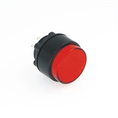

When a customer is buying a few samples, price and appearance are usually the first things they compare.
It is different when the switch is going to be used in a machine that will be produced for years.
At that point, customers want to know much more about the supplier. They may ask about the factory, production process, molds, testing equipment, certifications, quality control and the company's ability to handle future changes.
These questions are especially common when a push button is being used in industrial equipment, automation systems, control panels, EV charging equipment or other products that require stable long-term operation.
At ONPOW, we see supplier evaluation as a normal part of industrial purchasing.
What Does the Factory Actually Do?
One of the first things a customer wants to understand is whether the company is really manufacturing the product.
This matters when a project involves customized products or long-term supply.
If a customer needs to change the mounting size, housing, terminal or internal configuration, it is much easier to deal directly with the manufacturer that controls the product and production process.
ONPOW has been manufacturing push button switches since 1988. Over the years, we have built our own product development, tooling and production capabilities.
Today, we have around 40 product series and more than 1,500 sets of molds.
For customers, this means there is a manufacturing team behind the product rather than simply a sales catalog.
Why Do Buyers Ask About Molds?
Molds are rarely the first thing a buyer notices when looking at a push button.
For a manufacturer, they are important.
A change to the button housing, mounting structure or appearance may require a modification to an existing mold or the development of a new one.
Having an established tooling base makes it easier to handle these requirements.
ONPOW has accumulated more than 1,500 sets of molds through years of product development and production.
This experience is particularly useful for OEM projects, where a customer may already have a drawing, sample or specific panel design.
The discussion can then move from simply choosing a standard product to finding a practical way to manufacture the required switch.
How Is Quality Controlled?
A sample can tell a buyer what the product looks like.
It cannot tell them whether the same quality will be maintained after repeated production.
This is why factory audits often focus on the production process rather than just the finished product.
Customers may want to understand how materials are controlled, how components are inspected, how switches are assembled and how finished products are checked before shipment.
Depending on the product, inspections may involve dimensions, electrical performance, mechanical operation, illumination, waterproof performance and other specifications.
At ONPOW, quality control runs through the production process rather than being left entirely to the final inspection stage.
For repeat customers, consistency is just as important as the performance of the original sample.
What About Product Testing?
A push button can look perfectly normal and still have problems that cannot be seen from the outside.
Mechanical life, contact performance, electrical characteristics and waterproof performance are examples.
This is why industrial customers often ask about testing before approving a supplier.
The exact tests depend on the product and its application. A standard indoor push button does not necessarily require the same testing as an emergency stop switch or a waterproof switch used outdoors.
ONPOW carries out product inspection and testing according to the requirements of the product and customer application.
For buyers, testing provides useful information when comparing suppliers and approving a new product.
Certifications Are Also Part of the Audit
For equipment manufacturers selling internationally, certifications can become an important part of supplier approval.
The requirements depend on the destination market and the application, but customers may ask about CE, UL, VDE, CCC, RoHS and other compliance requirements.
ONPOW has established ISO9001, ISO14001 and ISO45001 management systems. Our products also include certifications such as UL, VDE, CCC and CE.
Having the relevant certification information available early in a project can help customers with their own product approval and documentation.
Can the Factory Handle Customized Products?
Many equipment manufacturers eventually need something that is not available as a standard catalog item.
It could be a different mounting dimension.
It could be a special button shape.
It could be a different LED configuration or contact arrangement.
It could also be a completely new structure based on a customer's drawing or sample.
This is where a supplier's engineering and tooling capabilities become important.
ONPOW has its own product development and tooling experience and has accumulated more than 70 patents.
For OEM projects, our engineers can work with customers on drawings, samples, product specifications and structural requirements before moving into production.
The earlier these details are discussed, the fewer surprises there are later in the project.
Can the Supplier Support Production for Years?
This is another question that matters to equipment manufacturers.
A machine may remain in production for several years. If a particular push button has already been approved and qualified, the customer does not want to replace it every year because the original supplier cannot continue production.
A stable production system and established tooling can make a big difference here.
ONPOW has been focused on push button switches for more than 30 years. The company has continued to develop its product range while maintaining production capabilities for long-term customers.
For us, supplying a product is not just about completing one purchase order. The same product may need to be produced again and again as the customer's equipment enters larger-scale production.
What Are Buyers Really Checking During a Factory Audit?
In the end, most factory audits come down to a few practical questions.
Is the supplier actually making the product?
Does the factory have the tooling and equipment needed for production?
How is quality controlled?
How are products tested?
Can the required certifications be provided?
Can the supplier develop customized products?
Can the same product be supplied consistently over the long term?
These questions may take some time to answer, but they can save much more time later.
For an industrial equipment manufacturer, the cost of a push button is only one part of the decision. A switch that causes repeated failures, quality complaints or production delays can cost much more than the original price difference.
Why Does ONPOW Take Supplier Audits Seriously?
We understand why customers ask these questions because we would ask the same questions when evaluating an important supplier.
ONPOW was established in 1988 and has focused on push button switches and related control components for more than three decades.
Our manufacturing capabilities include around 40 product series, more than 1,500 sets of molds and more than 70 patents. We also maintain quality and environmental management systems and provide products with certifications required for different international markets.
We do not expect customers to choose a supplier based only on a product photo or a price quotation.
Visit the factory. Check the production process. Look at the testing. Ask about the molds. Review the certifications. Discuss the technical requirements.
That is a much better way to decide whether a supplier is suitable for a long-term project.
For a push button supplier, the product is only the beginning. The factory behind the product is what supports the customer for years.