


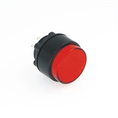

Pushbutton switches operate on a simple yet effective mechanical and electrical principle: they control the flow of electricity by physically connecting or disconnecting internal electrical contacts when pressed or released. Whether it's turning a lamp on and off, selecting floors in an elevator, or even the function buttons in a car, a sophisticated system of mechanical and electrical circuits works together. The core structure of a pushbutton switch typically consists of four parts: the housing, contacts, a spring, and a drive mechanism.

· Housing: Protects internal structures and provides an operation interface.
· Spring: Responsible for resetting, pushing the button back to its original position after pressing
· Contacts: Divided into fixed contacts and movable contacts, realizing circuit on/off through contact or separation.
· Drive mechanism: Connects the button and contacts, transforming the pressing action into mechanical displacement. Generally refers to the pressable part of a push button switch.
Two Common Operating Modes
Pushbutton switches are primarily divided into two categories based on the contact state when not pressed, and their operating processes differ slightly:
Normally Open (NO) Switch
Unpressed: A spring pushes the movable contact away from the fixed contact, placing the circuit between the contacts in an "open" state-no current flows.
When pressed: Applying force to the button compresses the spring, causing the actuator to move the movable contact toward the fixed contact until it makes contact. This closes the circuit, allowing current to flow through the contacts and activating the connected device.
When released: The external force is removed, and the spring rebounds, pushing the movable contact back into position. The contacts separate again, breaking the circuit and stopping the flow of current.
Normally Closed (NC) Switch
Unpressed: A spring holds the movable contact in close contact with the fixed contact, placing the circuit in a "closed" state-current continues to flow.
When pressed: Pressing the button compresses the spring, causing the actuator to pull the movable contact away from the fixed contact, opening the circuit and shutting off the current.
When released: The spring rebounds, reconnecting the contacts and closing the circuit again.