


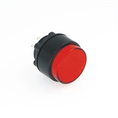

Metal push button switches are not only about appearance.
For equipment manufacturers, the more important questions are usually quite simple:
Will the switch hold up after years of use?
Can it handle dust, water, vibration, or accidental impact?
Does it feel solid when the operator presses it?
And can the supplier provide the right version for the machine?
These are some of the reasons metal push button switches continue to be used in industrial equipment, automation, transportation, energy systems, and other applications.
Based on what we see in the push button market, here are 10 common applications.
1. Industrial Automation Equipment
Automation equipment may run for long hours with operators pressing the same buttons thousands of times.
Start, stop, reset, mode selection, and manual operation are common functions.
For these machines, a metal push button can be a good choice when the control panel needs a stronger and more durable switch.
ONPOW has been manufacturing push button switches since 1988 and currently offers more than 40 product series for different control applications.
2. CNC Machines and Machine Tools
CNC machines are not exactly a friendly environment for small electrical components.
Oil, metal dust, vibration and frequent operation can all be part of the working environment.
This is one reason metal push buttons are often selected for machine control panels. The metal construction provides a solid feel and can withstand regular mechanical operation.
For machine builders, however, the switch should not be selected simply because it is metal. Electrical rating, mounting size, contact configuration and protection level still need to match the machine.
3. EV Charging Stations
Charging stations are another growing application.
Many charging stations are installed outdoors or in semi-outdoor environments. Users may operate the controls while the equipment is exposed to rain, dust, sunlight and temperature changes.
In this situation, a metal push button with suitable IP protection can make sense.
ONPOW offers metal push button models with waterproof designs, while some products are available with illumination for clearer operation at night or in low-light environments.
4. Industrial Control Panels
A control panel may contain dozens of switches, indicators and other components.
The push button is often the part that the operator physically interacts with every day.
This makes the operating feel surprisingly important.
A good button should not feel loose, inconsistent or fragile after repeated use.
For this reason, metal push buttons are commonly considered for control panels where durability and a more solid operating feel are important.
5. Robotics and Automation Systems
Robots themselves may be highly automated, but people still need physical controls around them.
Reset buttons, start buttons, manual controls and emergency controls are all found around robotic equipment.
Space can also be limited, so compact metal switches are useful when equipment manufacturers want a durable control interface without taking up too much panel space.
The exact switch, of course, depends on whether it is being used for normal operation or as part of a safety function.
6. Energy Storage Equipment
Energy storage systems are becoming increasingly common in industrial and commercial facilities.
These systems often require external controls for start, stop, reset, maintenance or status indication.
A metal push button can provide a robust interface for this type of equipment, particularly where the control panel may be exposed to dust, humidity or frequent operator use.
The protection rating should always be considered together with the enclosure design rather than looking at the switch alone.
7. Food Processing Machinery
Food processing equipment presents a different challenge.
Cleaning, moisture and frequent operation are important considerations.
Stainless steel push buttons can be attractive for this type of equipment because the material is suitable for applications where a durable and easy-to-clean external surface is required.
ONPOW also manufactures special-function switches, including piezo switches designed for demanding applications. Some of these products offer IP68/IP69K protection and are used in food cleaning equipment and similar applications.
8. Medical and Laboratory Equipment
Not every medical or laboratory application needs a metal button, but some equipment manufacturers prefer metal controls for their appearance, durability and tactile feel.
The button may be used for equipment start-up, adjustment, reset or operator control.
Here, details such as button size, illumination color, operating force and panel design can be just as important as the material itself.
9. Outdoor and Harsh-Environment Equipment
This is probably one of the clearest applications for metal push buttons.
Outdoor equipment may have to deal with rain, dust, accidental impact and temperature changes.
Depending on the product design, IP65, IP67 or higher protection can be required.
ONPOW's metal push button range includes products designed for harsh environments, with some models offering IP67 protection and impact resistance up to IK10.
But there is an important point here:
A metal button is not automatically waterproof.
The actual IP rating depends on the specific construction, sealing and installation conditions.
This is something buyers should check before placing an order.
10. Transportation and Special Equipment
Metal push buttons are also found in transportation equipment, special vehicles, security systems and other specialized machinery.
These applications often require something more specific than a standard catalog switch.
Panel size, electrical characteristics, illumination, operating method, protection rating and installation environment can all affect the final selection.
This is where having a manufacturer with customization experience can be useful.
Why Do Equipment Manufacturers Choose Metal Push Buttons?
There is no single reason.
For some buyers, it is durability.
For others, it is the tactile feel.
Some need better protection against water and dust. Others simply want a cleaner, more professional-looking control panel.
And for OEM equipment manufacturers, customization can be just as important as the switch itself.
ONPOW manufactures metal and plastic push button switches as well as emergency stop buttons, selector switches, indicator lights and other control components. The company also provides customized solutions based on customer drawings, samples and application requirements.
The company controls a number of production processes internally, including metal parts, plastic parts, stamping components, molds and assembly, which helps keep the manufacturing process under closer control.
Metal Is Not Always Better
This is worth saying.
Metal push buttons are not automatically the best choice for every machine.
Plastic buttons can be lighter and more economical, and they can work very well in many indoor applications.
The right choice depends on the actual working environment.
Before selecting a metal push button, buyers should look at:
Panel cutout size
Electrical rating
NO/NC contact configuration
Momentary or latching operation
IP protection
IK impact resistance
Material
LED requirements
Operating temperature
Mechanical life
Installation environment
What Do Users Really Notice?
After years of making push button switches, one thing becomes clear: buyers usually do not care about a switch simply because it is made of metal.
They care about whether it works properly after installation.
They care about the button feeling consistent.
They care about whether the specifications match the machine.
And, when they are buying thousands of pieces for production, they care about whether the same quality can be maintained from one batch to the next.
That is where manufacturing experience matters.
ONPOW has focused on push button switches for more than 30 years, with a product range covering metal push buttons, plastic push buttons, emergency stops, selector switches, special-function switches and related control products.
For an equipment manufacturer, the best push button is not necessarily the most expensive one.
It is the one that fits the application, performs reliably and can be supplied consistently over the life of the project.
That's what ONPOW believes a push button should do.